Keynotes




Great Work. By Design.™
What’s Standing Between Your People and Their Best Work
The flagship keynote introduces the entire system: identify and build the conditions that transform potential, into performance.
It’s about the structural reasons high-performing teams stay stuck together — even when their organization is going through fragmentation, hybrid pressure, or rapid growth — and why most leadership teams are trying to solve cohesion with the wrong tools. Jessica gives leaders a working diagnostic for what’s holding their team together (or not), a five-step sequence for rebuilding it, and three moves they can deploy the following Monday.
Attendees will know :
- The seven places team cohesion leaks, and which ones their team has
- Why “team building” usually fails and what works instead
- The five-step deliberate build for trust, belonging, and safety
- Why connection and trust are operating decisions, not culture programs
Together Under Pressure™
How Great Teams Stay Connected Under Pressure
The cohesion keynote: great work becomes inevitable when teams remain connected when everything is changing.
Most culture talks are inspirational. This is operational. Jessica’s audiences leave with a vocabulary for what’s actually broken, a diagnostic for finding it, and a specific operating sequence to rebuild it. It’s the keynote for the room that’s tired of being told culture matters and wants to know what to do about it.
Attendees will know:
- The flight-risk pattern that hides inside stable retention numbers
- The five things people actually optimize for when they stay
- Why salary and benefits cannot solve a depletion problem
- How to read the 2026 retention data with C-suite clarity
A Full Tank™
The Sustainable Capacity Behind Great Performance
The energy keynote: great work becomes inevitable when performance does not require constant depletion.
Leadership teams that can feel cohesion slipping but can’t name where it’s going. All-employee gatherings after an RTO transition or merger. Annual kickoffs where the executive team wants to set a tone of trust for the year ahead. Cross-functional or post-reorg teams that need to operate as one unit, fast.
The room leaves with a clear-eyed read of what the 2025 burnout data actually says, a subtraction-first protocol they can implement in one sprint, and the one-question test for whether their wellness budget is solving the problem or hiding it.
Attendees will know:
- What the 2025 burnout data actually says and what to ignore
- The three drivers of cognitive burnout the old playbook misses
- Why their wellness budget may be hiding the problem
- The relationship between subtraction and sustained performance
The Silence Tax™
What Organizations Lose When People Stop Telling the Truth
The candor keynote: great work becomes inevitable when essential information can move quickly and honestly.
Three windows hit the sharpest: after a hybrid or RTO shift when cohesion has visibly slipped, in the first 90 days after a merger or acquisition, and at the start of a stretch year when the leadership team needs to set the foundation of trust before the pressure hits.
A shared vocabulary for what makes teams actually hold together, a five-step sequence for rebuilding cohesion, and three immediate moves leaders can deploy in the following week. Usable language by Monday, not feelings by Tuesday.
Attendees will know:
- Why psychological safety theory has not translated to operating practice
- The three asymmetries that hide inside “open” cultures
- The exact build for the Glitch Report system
- The leadership architecture underneath candor




Workshop
The Art of Adaptation
Duration: 3–4 hours / 6–8 hours / 45-min keynote add-on
Resilience at the team level is a build, not a sum. You cannot add up five resilient people and get a resilient team. The capabilities are different. The science is settled.
The keynote industry has not caught up, and most resilience programs are still pitched as personal practice. The Art of Adaptation treats team resilience as what it actually is: a working capability that can be deliberately constructed.
Customization options:
Industry-specific case studies and examples
Integration of company values and current strategic priorities
Sample scenarios designed pre-event around the team’s actual operating context
Follow-up resources and implementation plans
Optional 30-day and 90-day check-in calls with Jessica
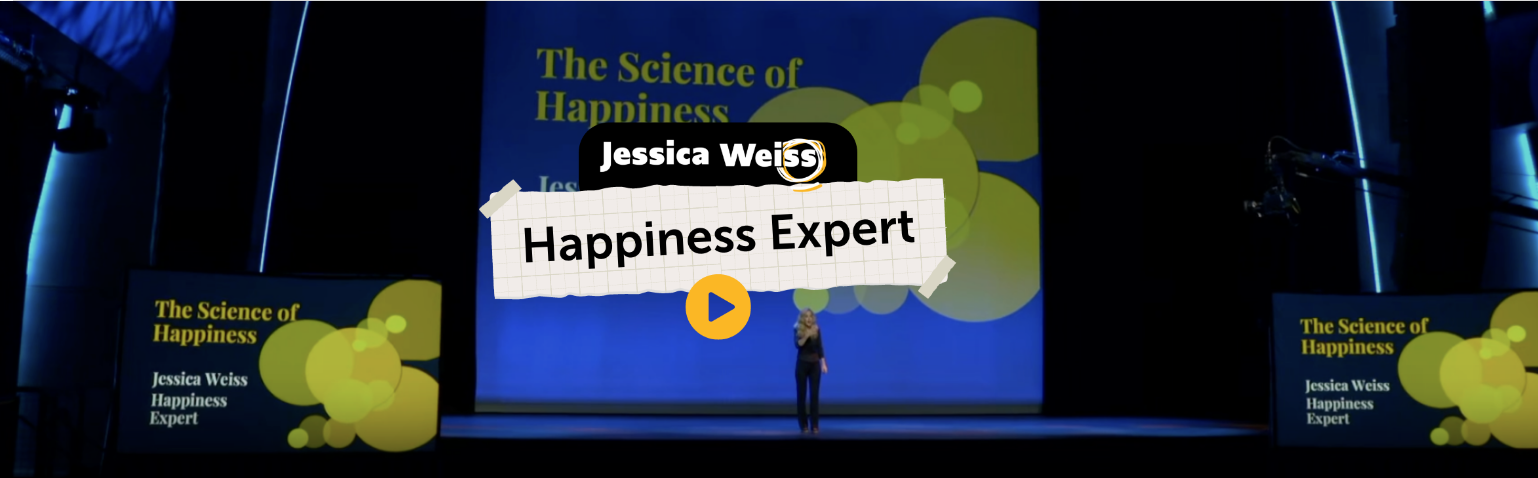
Watch Jessica in action at the Global Leadership Summit
71% of adults say having a job they enjoy is a pivotal part of living a fulfilling life (Pew Research Center).
Companies Impacted by Jessica